






What is AI Vibration Inspection?
AI vibration inspection is an image-based inspection method that leverages deep learning technology. Specifically, it converts extracted vibration data into images and automatically optimizes the system so that defective areas are flagged as NG. By using AI, it becomes possible to automatically detect the characteristics of defective areas and build a model, achieving high inspection accuracy.

The "3 Objectives" of AI Vibration Inspection
Vibration inspection is a critical process that verifies whether product quality conforms to specifications and defined standards.
- Quality Assurance
-
In manufacturing, it is essential to provide "quality assurance to consumers" and, as a supplier, to "comply with the quality standards of customers."
If defective products reach consumers, the risks go beyond functionality and safety — they can lead to recalls and reputational damage, causing serious business losses.
There is also a risk of escalating into serious issues such as customer complaints or suspension of business relationships. AI vibration inspection therefore checks whether
products meet quality standards, playing a critically important role. - Quality Maintenance
-
Continuously checking for inconsistencies in product quality is essential from the perspective of maintaining quality and ensuring stable supply.
Conducting vibration inspection with consistent standards leads to stable quality maintenance. - Quality Improvement
-
While product inspection is essential, it is equally important to improve manufacturing processes and equipment to prevent defects from occurring in the first place.
Through vibration inspection, identifying and addressing the root causes of defects becomes the fundamental objective.
Strengths of AI Vibration Inspection
Standardization of Inspection Criteria
AI (deep learning) can learn from "human sensory judgments" and "subtle defects detected by skilled inspectors," enabling high-accuracy inspection under unified standards.
Inspection Automation Based on Expert Inspector Standards
With conventional vibration inspection systems, thresholds were set subjectively by individual operators, resulting in inconsistent inspection standards across different inspection lines and operators. AI vibration inspection, by contrast, recognizes the characteristics of detection targets for stable inspection, eliminating the need for frequent threshold adjustments and enabling "standardization of inspection criteria," as well as "reduction of adjustment workload."
AI Vibration Inspection vs.
Conventional Vibration Inspection Methods
Sensory Inspection
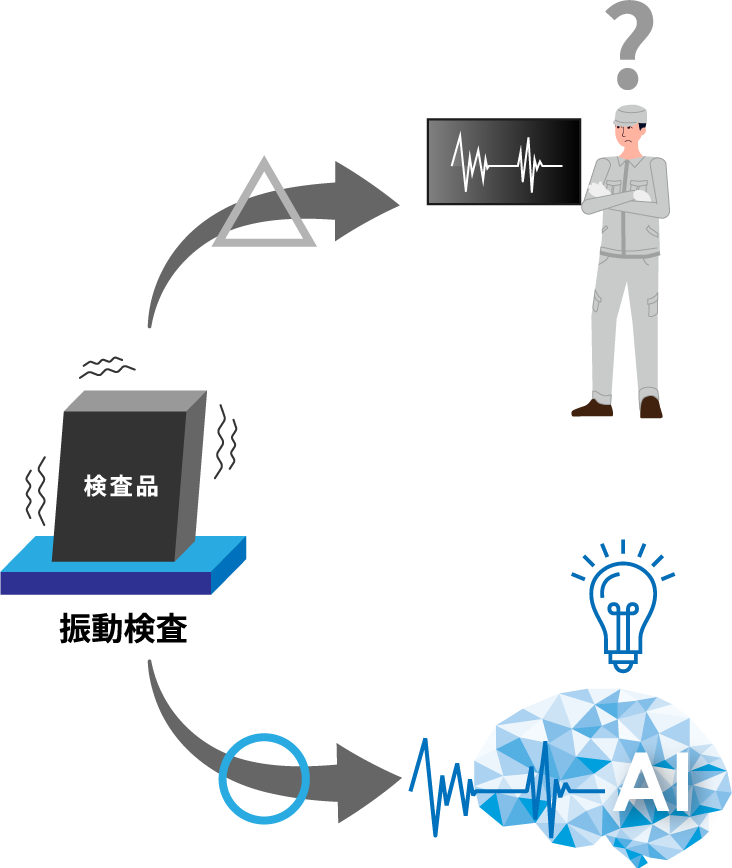
This method involves applying vibration to the inspection target and judging its condition from the resulting data.
Distinguishing subtle differences requires skilled technique, making the inspector's skill and experience essential.
In addition, since factors beyond technical skill — such as changes in physical condition — can also affect results, inspection quality varied from person to person, leading to missed detections and false positives caused by human error
With an AI vibration inspection system, the model learns from historical data to build a system that automatically detects defects.
As a result, missed detections due to human error and ambiguous judgments on difficult-to-inspect products can be detected accurately.
Inspection Examples with AI Vibration Inspection
Finished Product InspectionAutomotive parts, electronics, etc.
Analyzes data obtained by applying vibration to parts or products to classify them as good or defective.
Predictive Maintenance of Production EquipmentFactory machinery, etc.
Monitors time-series data from production equipment to detect early signs of failure and prevent unexpected downtime.
Monitoring of Production Equipment and FacilitiesFactory machinery, etc.
The primary purpose is to confirm that equipment and machinery are operating stably. Continuous monitoring for accident prevention in chemical plants is also possible.
Structural InspectionBridges, utility poles,
tunnel concrete, etc.
Records and analyzes the vibrations generated by impact to inspect structures for abnormalities such as loosening or deterioration.
Do any of these challenges sound familiar?
- Missed detections occur in sensory inspection and you want to standardize criteria and improve accuracy
- Recruiting and training personnel takes too long, so you are pursuing workforce reduction
- Conventional waveform analysis requires significant effort to define rules, and there are limits to its accuracy Feel Free to Contact Us
Two Implementation Patterns
Automation of Sensory Inspection
Challenges of Sensory Inspection
- Inconsistent inspection standards
- Inspection time limits production volume
- Difficulty hiring inspectors / high training costs
workforce reduction
Improving Accuracy of Existing Inspection Systems
Improving Accuracy of Existing Inspection Systems
- Frequent false judgments increase operational and disposal costs
- Existing inspection systems cannot detect certain types of defects
- Daily threshold adjustments cause inconsistent inspection standards
your existing system to achieve
higher inspection accuracy
Free Verification Testing Before Implementation
To ensure even first-time AI adopters can explore the technology with confidence, we offer free initial testing and report preparation. Testing is conducted using the latest algorithms, with comparison across multiple models.
On-Site Assessment
Reviewing imaging conditions suited to the on-site environment
Work Test
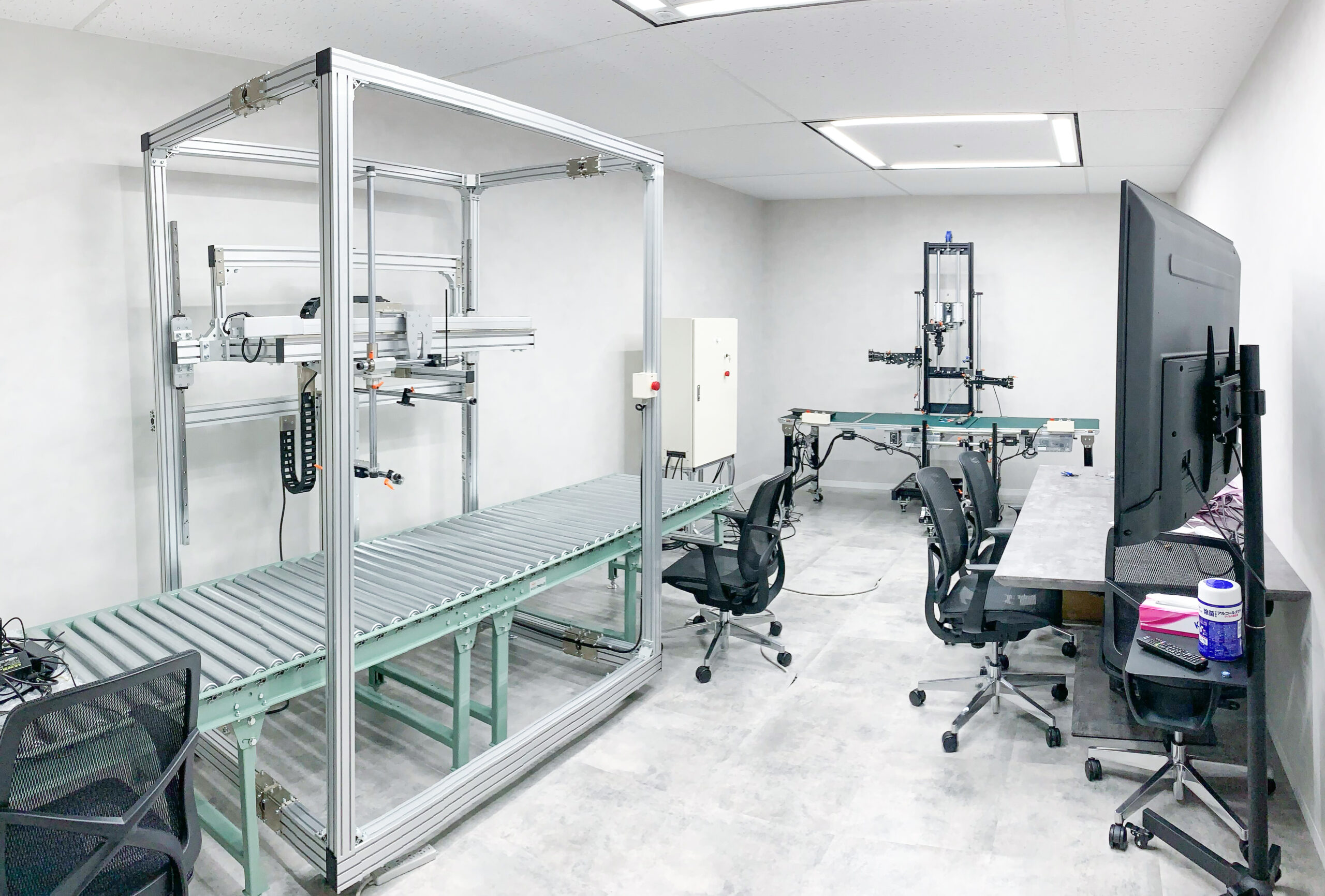
Product imaging and AI inspection model verification
Report Preparation

Preparing a report and explaining the verification results
Related Pages