





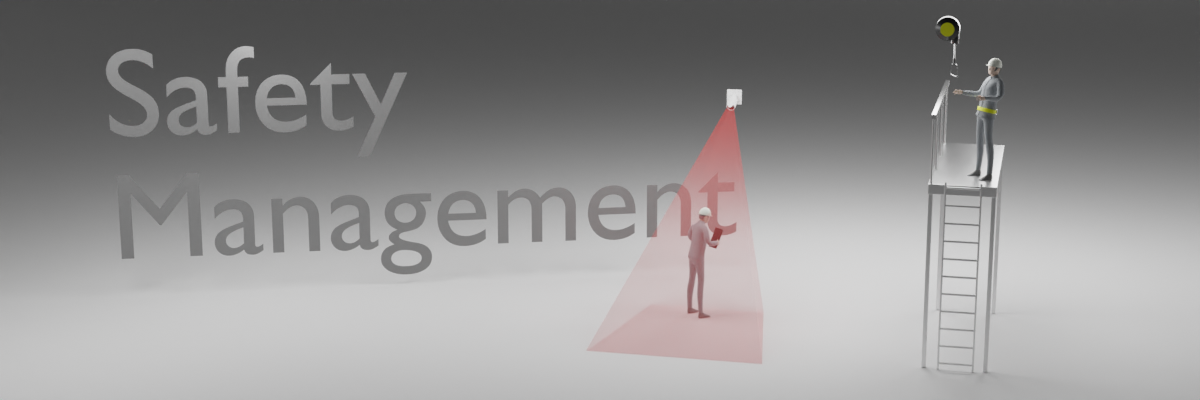
Manufacturing Work Is Always One Step Away from Danger
Manufacturing work carries many risks, and unexpected workplace accidents can occur at any time.
According to data from the Ministry of Health, Labour and Welfare (※), the following types of accidents occur most frequently in manufacturing environments.
1st Caught-in / Entanglement Accidents (6,049 cases)
2nd Slip and Fall Accidents (5,070 cases)
3rd Falls from Height Accidents (2,975 cases)
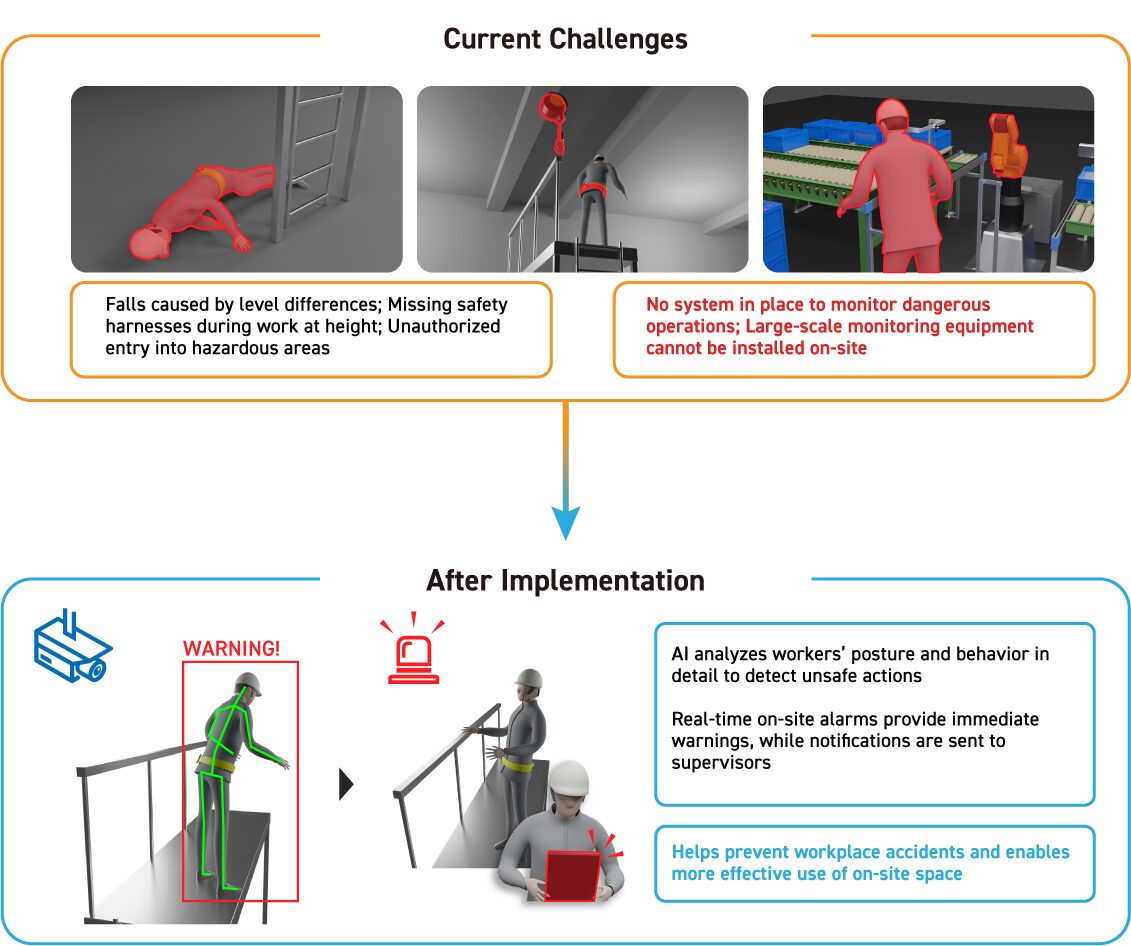
Determining whether “a worker has fallen” or “a worker is at risk of falling from height” requires
advanced judgment that considers the worker’s posture and surrounding conditions on site — making it difficult to detect with conventional technology.
In addition, some facilities face physical constraints where limited workspace makes it impossible to install large-scale equipment such as safety curtains.
(※ Ministry of Health, Labour and Welfare, “Analysis of Workplace Accident Occurrences in FY2019”)
- Hazardous operations are difficult to define, and conventional technology cannot detect them
- Large-scale equipment takes up valuable factory floor space
Detecting Manufacturing Hazards Before They Happen with AI
Handling Specialized Operations with VRAIN Solution’s Unique AI Technology
With AI technology, even hazardous operations that could not previously be detected can now be identified, enabling proactive prevention of workplace accidents.
Since it can be implemented starting with just one camera, there are no concerns about finding installation space.
VRAIN Solution also specializes in AI services tailored specifically to the manufacturing industry.
This deep expertise in manufacturing allows us to accurately understand your needs and deliver solutions tailored to your specific site.
Case Studies
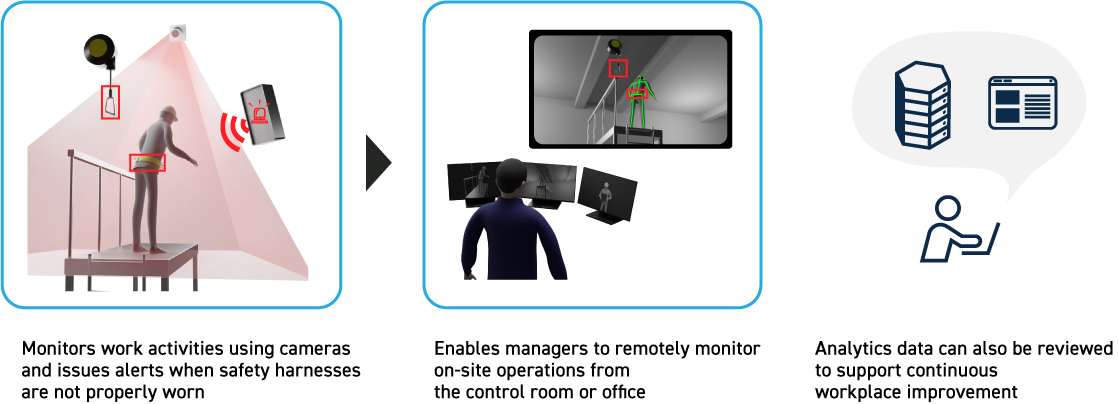
Case 1: Detecting Workers Forgetting to Wear Safety Harnesses During Work at Height
| Company | Food Processing Manufacturer |
|---|---|
| Background & Objective | ・Safety harnesses are mandatory during elevated work on trucks, but workers have been forgetting to wear them |
| Results | ✅ Forgotten safety harnesses reduced from a monthly average of 3 incidents to 0 ✅ Recording and analyzing operational data also led to improvements in on-site workflows |
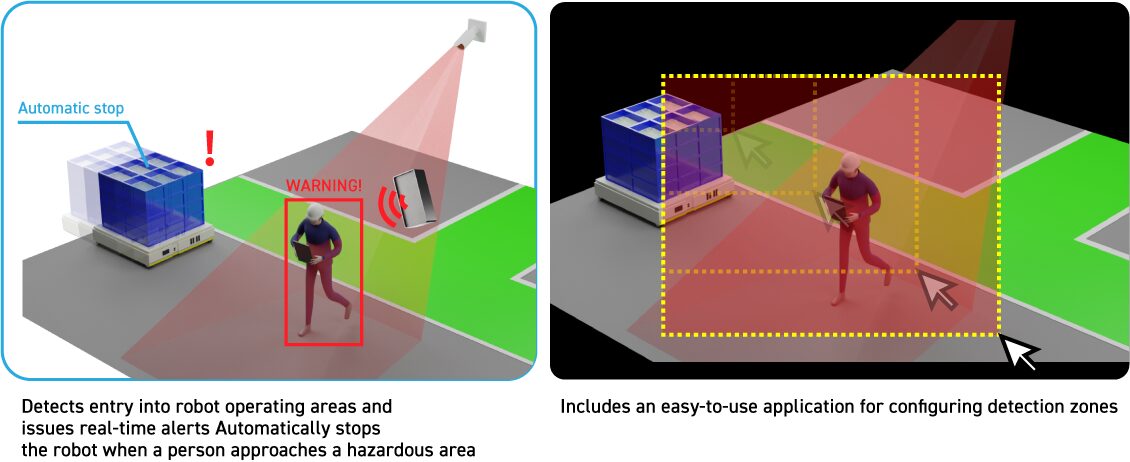
Case 2: Detecting Unauthorized Entry into Robot Operating Zones
| Company | Metal Processing Manufacturer |
|---|---|
| Background & Objective | ・Considering introducing industrial robots, but their operating area overlaps with human work areas ・Need to automatically stop the robot if a person enters the danger zone during operation |
| Results | ✅ Collaboration with industrial robots made possible ✅ Effective use of factory floor space achieved |
Implementation Flow
1
Understanding the Current Situation
2
Data Collection / Analysis
3
AI Model Development
4
Deployment & Operation


