






What is AI Visual Inspection?
AI visual inspection is an image-based inspection method that leverages deep learning technology.
Specifically, by training an AI to recognize the features to be detected, those features are then automatically identified during inspection.
Conventional visual inspection required specialized engineers to define optimal rules and build models, making implementation difficult.
With AI visual inspection, model building is now possible through simple operations such as clicking to outline the features to be detected.
As a result, implementation is now possible with existing human resources, making inspection automation much easier.
In terms of inspection capabilities, AI offers many advantages over manual and rule-based approaches, making it truly a next-generation visual inspection solution.
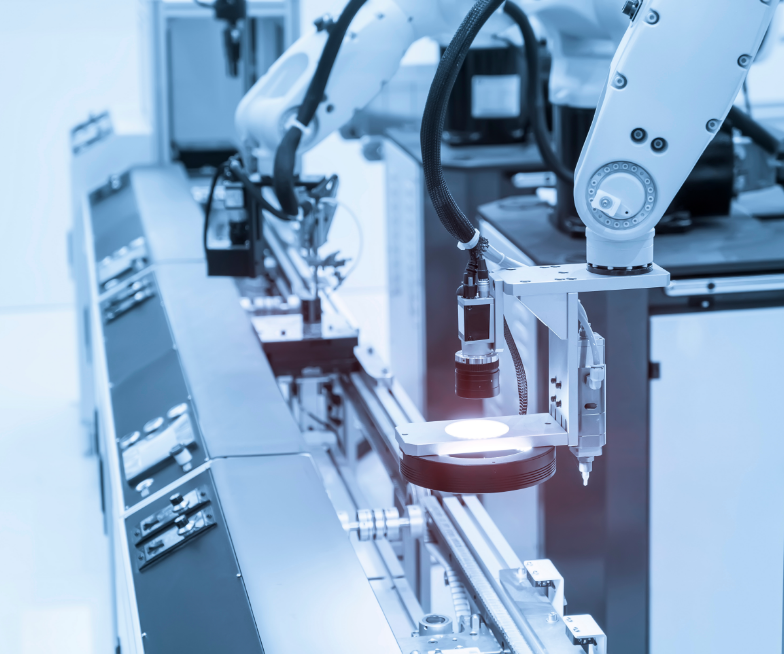
The "3 Objectives" of AI Visual Inspection
Visual inspection is a critical process that verifies whether product quality conforms to specifications and defined standards.
- Quality Assurance
-
In manufacturing, it is essential to provide "quality assurance to consumers" and, as a supplier, to "comply with the quality standards of customers." If defective products reach consumers, the risks go beyond functionality and safety — they can lead to recalls and reputational damage, causing serious business losses. There is also a risk of escalating into serious issues such as customer complaints or suspension of business relationships. AI visual inspection therefore performs high-standard checks to ensure products meet quality criteria.
- Quality Maintenance
-
Continuously checking for inconsistencies in product quality is essential from the perspective of maintaining quality and ensuring stable supply. Conducting visual inspection with consistent standards leads to stable quality maintenance.
- Quality Improvement
-
While product inspection is essential, it is equally important to improve manufacturing processes and equipment to prevent defects from occurring in the first place.
Implementing AI visual inspection also serves as a means to identify and address the root causes of defects.
Strengths of AI Visual Inspection
Robust Inspection Capability
Conventional visual inspection detected defects by specifying inspection areas and measuring intensity differences, making it difficult to handle products with complex shapes or surface conditions. With AI (deep learning), judgments are based on learned features, enabling reliable inspection of metals, fibers, and food products with complex surfaces or varying shapes.
Standardization of Inspection Criteria
Conventional visual inspection could not detect defects without clear intensity differences. AI (deep learning), however, can learn from "human sensory judgments" and "subtle defects detected by skilled inspectors," enabling high-accuracy inspection under unified standards.
Inspection Automation Based on Expert Inspector Standards
In conventional image inspection systems, operators manually set thresholds on an individual basis, leading to widespread inconsistency in inspection standards across lines and operators. AI image inspection, by contrast, recognizes the characteristics of detection targets for stable inspection, eliminating the need for frequent threshold adjustments and enabling "standardization of inspection criteria" as well as "reduction of adjustment workload."
AI Visual Inspection vs.
Conventional Visual Inspection Methods
Manual Visual Inspection
Manual visual inspection is widely used in factories, but a key challenge is that inspection quality varies depending on the worker.
Since results also vary based on the inspector's skill and physical condition, inconsistencies in inspection quality are unavoidable.
This can lead to serious risks of defective products — such as those containing foreign matter — reaching the market.
In addition, the limited speed of manual inspection affects production volume, and difficulty in hiring due to labor shortages poses further challenges.
With an AI visual inspection system, inspection standards can be unified, achieving consistent inspection quality and improved inspection speed.
Image Inspection Systems
Conventional image inspection uses a "rule-based" approach, making judgments by setting rules such as intensity differences, binarization, and RGB-based color area detection.
As a result, it often fails to handle subtle variations that humans can perceive but are difficult to define with clear boundaries, leading to frequent missed detections and false judgments.
A key feature of AI visual inspection is that the AI automatically makes judgments based on what it has learned.
As the model is trained further, it becomes capable of handling various types of defects in shape, size, and more, enabling accurate detection of subtle changes and difficult-to-judge defects.
Types of Inspections with AI Visual Inspection
| Visual Inspection | Details | ||
|---|---|---|---|
| Specification Defects | |||
| Shape | Deformation Inspection | ||
| Position | Misalignment Inspection | ||
| Design | Design Misalignment & Scuffing Inspection | ||
| Surface Defects | Scratches | Scratch, Scuff, Dent & Damage Inspection | |
| Contour | Burr & Chipping Inspection | ||
| Surface | Surface Inspection for Stains, Wrinkles, Unevenness & Color Irregularities | ||
| Foreign Matter | Foreign Matter & Dust Contamination Inspection | ||
AI Visual Inspection Case Studies
Do any of these challenges sound familiar?
- You want to implement a visual inspection system but don't know where to start
- You purchased a conventional visual inspection system (rule-based) but found the accuracy insufficient and couldn't use it
- Missed detections occur in manual visual inspection and you want to standardize criteria and improve accuracy
- Your current inspection system requires frequent threshold adjustments, wasting time and labor Feel Free to Contact Us
Two Implementation Patterns
Automation of Manual Visual Inspection
Challenges of Manual Visual Inspection
- Inconsistent inspection standards
- Inspection time limits production volume
- Difficulty hiring visual inspectors / high training costs
workforce reduction
Improving Accuracy of Existing Inspection Systems
Improving Accuracy of Existing Inspection Systems
- Frequent false judgments increase operational and disposal costs
- Existing inspection systems cannot detect certain types of defects
- Daily threshold adjustments cause inconsistent inspection standards
your existing system to achieve higher inspection accuracy
What Only VRAIN Solution Can Do
In AI visual inspection, the AI inspection system itself is important, but "device selection" and "lighting technology" are equally critical factors.
"Device selection" refers to the choice of camera, lighting setup, and ejection mechanism (including robots) for sorting defective products.
Capturing clear images (data acquisition) suited to the target object is key to improving inspection accuracy and stability, making it essential to select the optimal camera resolution and lighting brightness.
The ejection mechanism must also smoothly remove defective products without affecting production speed.
Drawing on our extensive experience in image processing, we analyze the optimal imaging conditions for each inspection target and provide recommendations from the device selection stage.
By applying the most suitable model from multiple cutting-edge AI algorithms to high-quality image data, we can build high-accuracy inspection systems even for challenges that were difficult with conventional methods.
inline integration.
Free Verification Testing Before Implementation
To ensure even first-time AI adopters can explore the technology with confidence, we offer free initial testing and report preparation. Testing is conducted using the latest algorithms, with comparison across multiple models.
On-Site Assessment
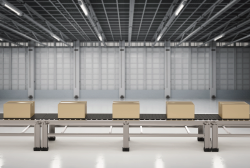
Reviewing imaging conditions suited to the on-site environment
Work Test
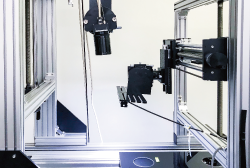
Product imaging and AI inspection model verification
Report Preparation

Preparing a report and explaining the verification results
Related Pages