






ITOHAM YONEKYU HOLDINGS INC. (headquartered in Meguro, Tokyo) is one of Japan’s leading processed meat and food manufacturers, established in 2016 through the management integration of Itoham and Yonekyu.
As a group, they handle the manufacturing and sales of processed foods including meat, ham, and sausages, providing safe, reliable, and high-quality products under the philosophy of “contributing to the realization of a healthy and prosperous society.”
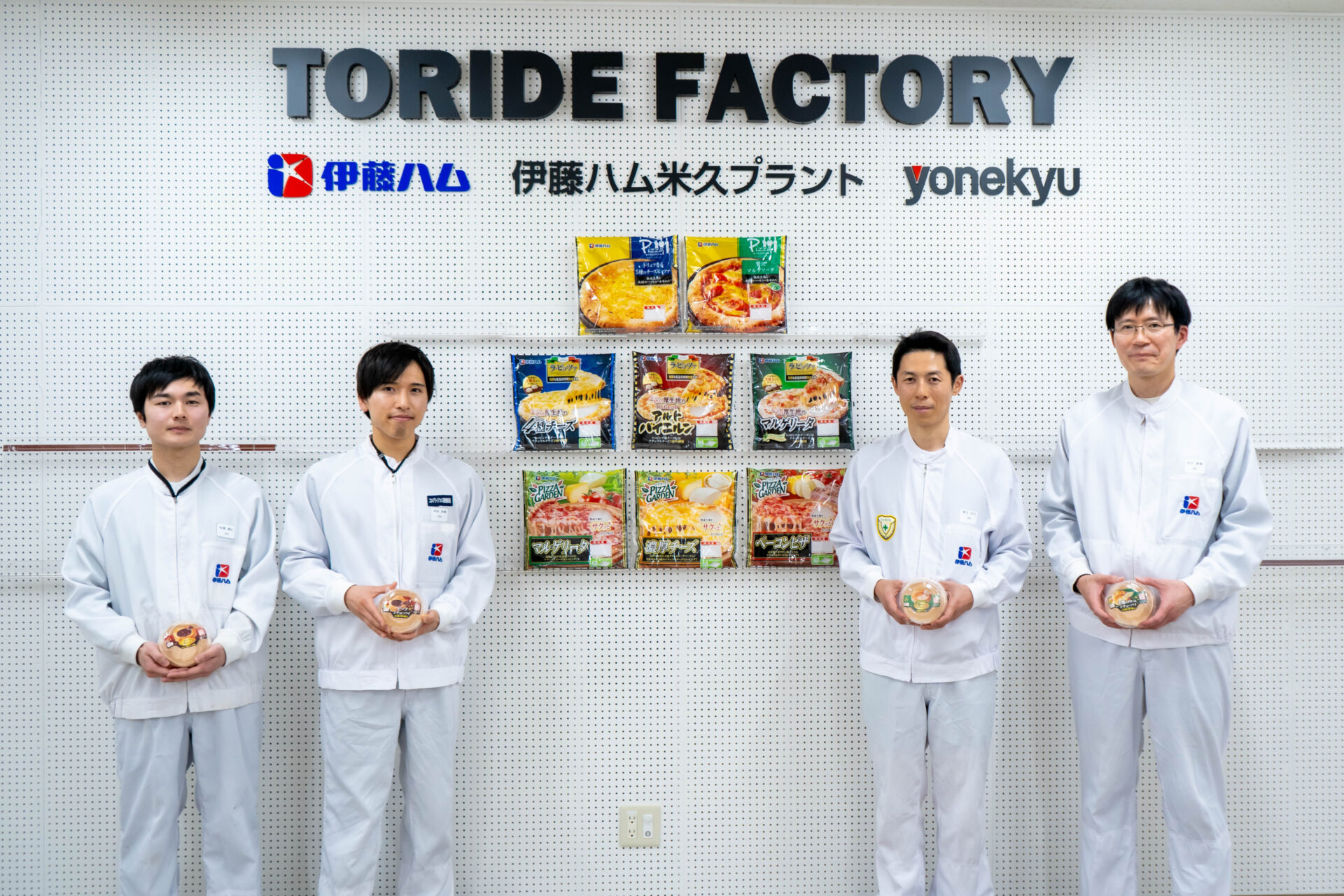
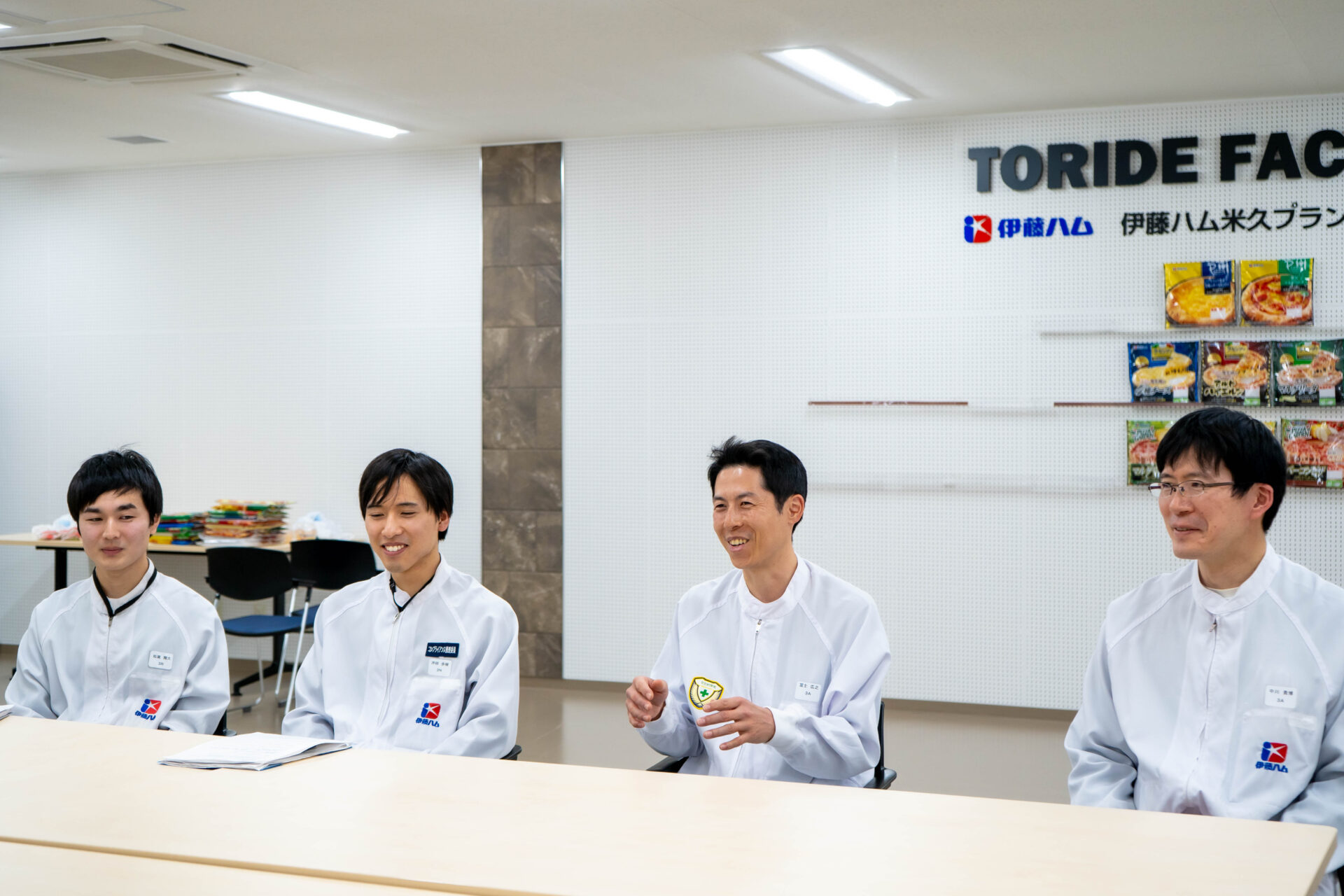
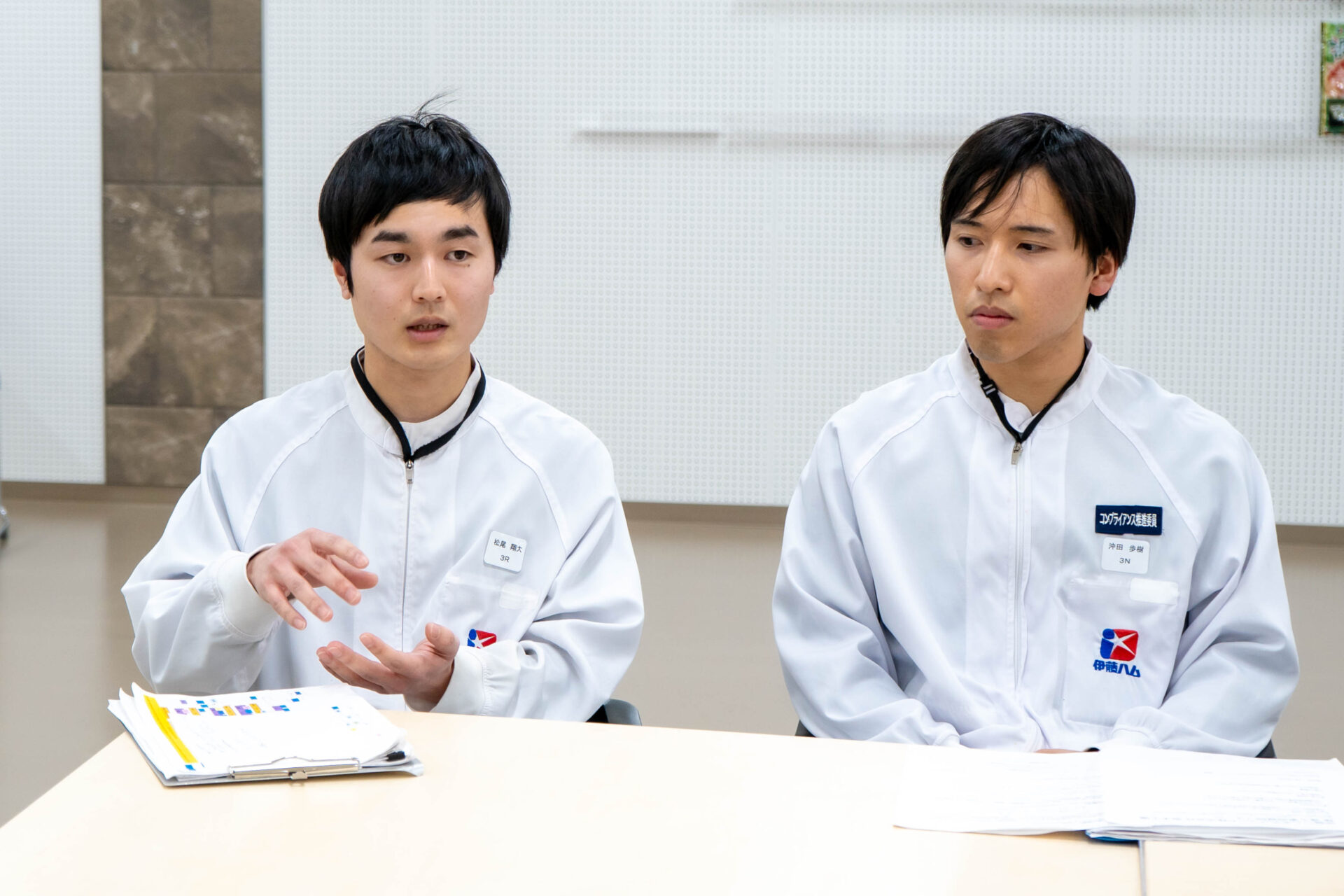
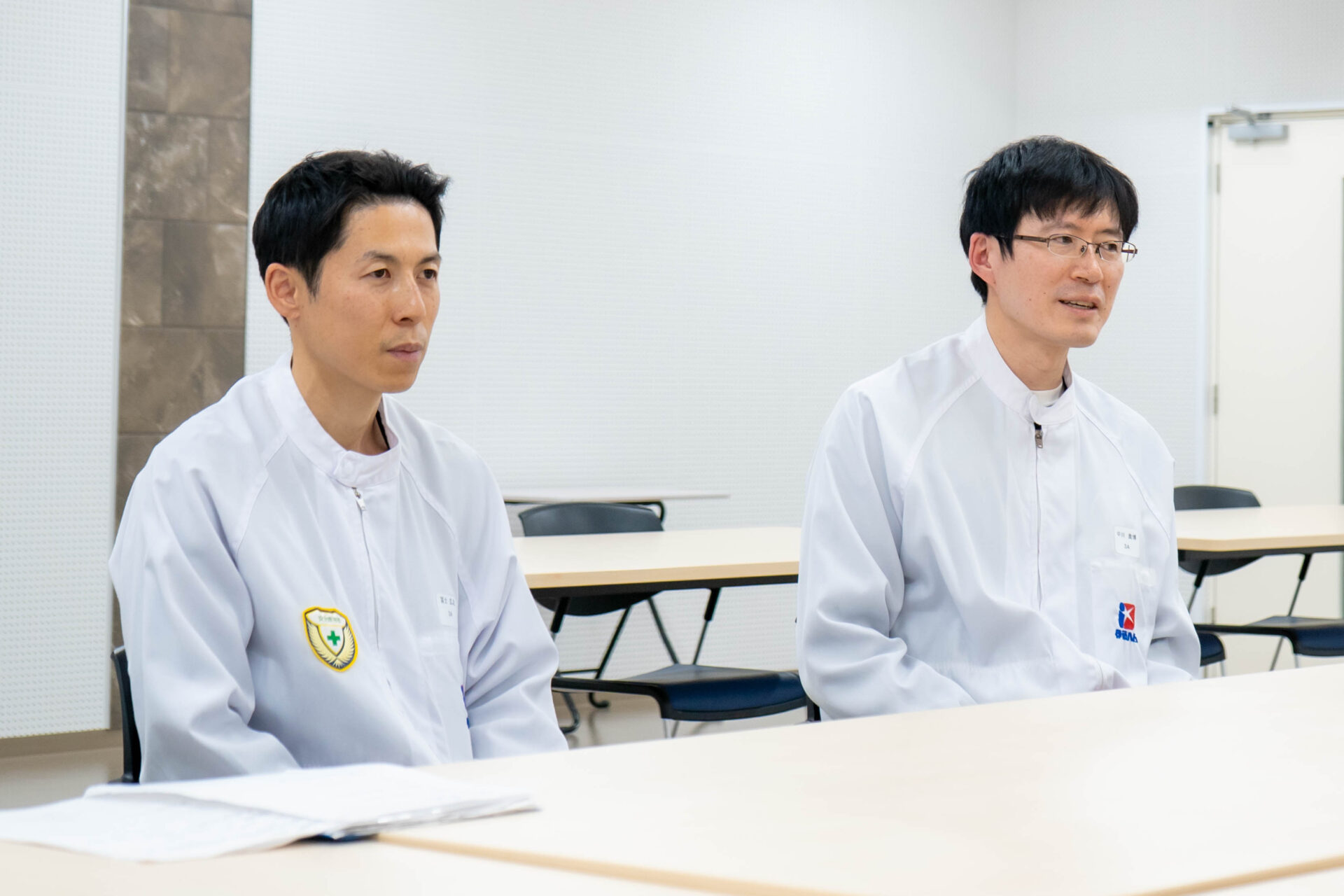
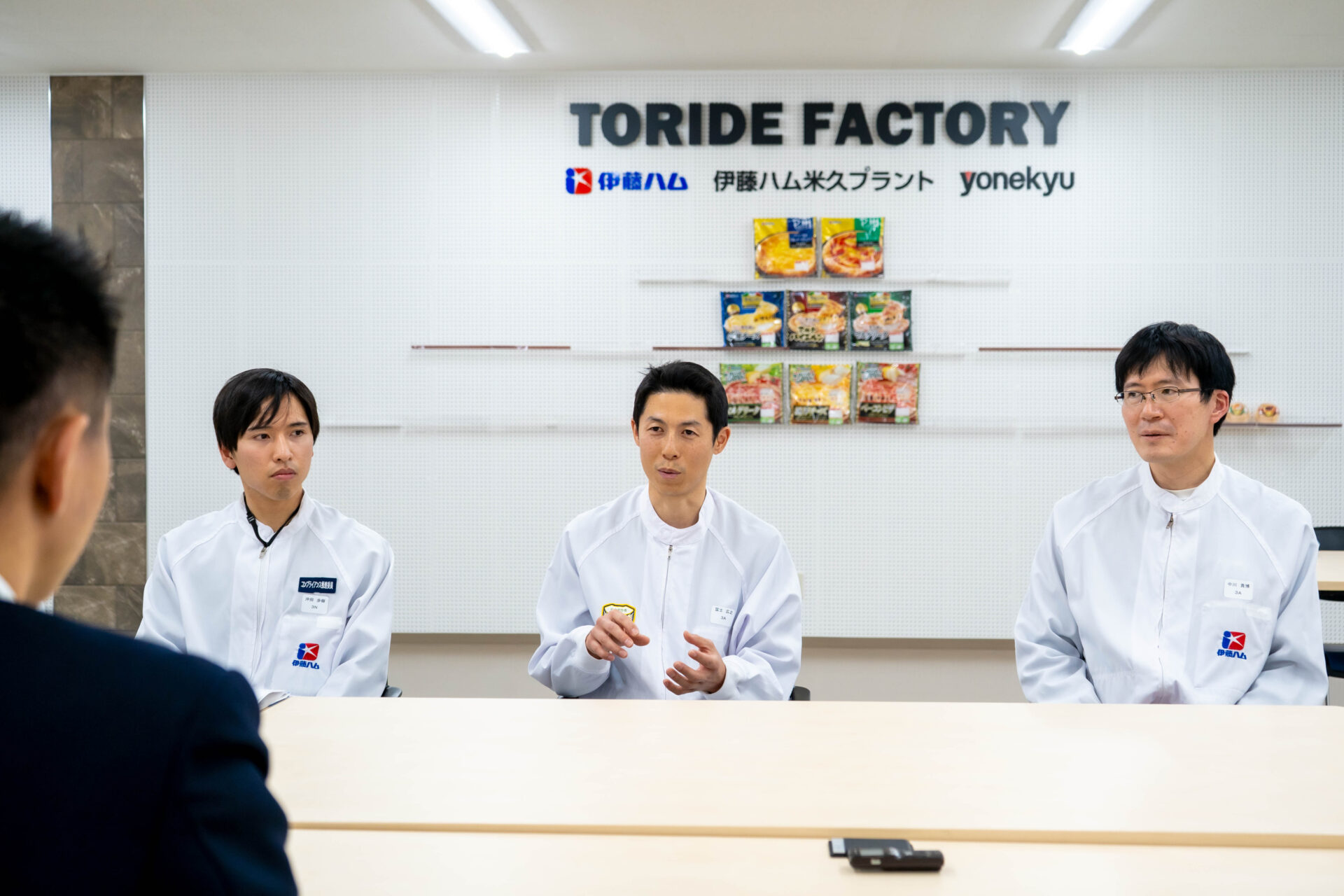
We visited the Toride Plant of Itoham Yonekyu Plant Co., Ltd., a group company in Toride City, Ibaraki Prefecture, and spoke with Mr. Nakagawa from the Management Department, and Mr. Fuji, Mr. Okita, and Mr. Matsuo from the Manufacturing Department, about the background, results, and actual operation of the AI visual inspection system on the pizza and burrito production lines.
and Reducing Workforce
Through AI Visual Inspection System Implementation
ITOHAM YONEKYU HOLDINGS INC. — Complete AI Visual Inspection System for Frozen Pizza & Burrito
Selection Criteria
■ Confirmed high inspection accuracy capable of replacing manual visual and tactile inspection
■ By training on defects, the system can flexibly adapt to future defect types and process changes点
Implementation Results
■ Variation in manual inspection reduced, achieving stable inspection quality
■ Tangible workforce reduction benefits experienced through continued operation
Background: Labor Shortages and Inconsistent Inspection Accuracy Were Major Challenges
— What challenges did you face before implementation?
Before implementation, inspectors performed visual and tactile inspection at the final process stage. However, since human inspection inevitably leads to variability in judgment, maintaining consistent quality was a challenge.
With growing labor shortages, maintaining an inspection system dependent on human workers seemed increasingly unsustainable, and the dual goal of “stable inspection accuracy” and “workforce reduction” became the major motivation for exploring a solution.
The Deciding Factor: The Ability to Detect Defects That Human Inspection Struggled to Catch
— What was the deciding factor in your adoption?
The first process we implemented was the packaging process. In packaging, there are not only defects easily visible to the eye, but also many subtle defects that require a high level of concentration to detect.
Continuously monitoring a line running approximately 7,000 units per hour placed a heavy burden on operators, making it difficult to sustain stable inspection.
During the trial phase, the AI camera captured defects that conventional inspection equipment had difficulty detecting, and we saw the potential to “replace manual visual and tactile inspection” — this became the deciding factor for adoption.
AIReason for selecting AI-based visual inspection: We recognized its ability to expand the range of inspection targets through learning.
— Had you previously worked on inspection automation? And did you compare with other vendors?
We had already introduced X-ray inspection equipment and metal detectors for foreign object detection. However, for items such as seal defects and subtle visual defects, we felt there was room for further accuracy improvement.
We initially focused primarily on detecting center seal defects, but found it appealing that AI visual inspection could expand the scope of detectable defects — such as top seal defects and bite-ins — through additional AI training.
The scalability to flexibly adapt to future changes in defect trends and customer requirements was a major reason for choosing the AI visual inspection system.す。
Where AI Is Especially Effective: Consistently Detecting Defects Difficult for Humans to Judge
— Did AI inspection performance meet your expectations?
Since implementation, repeated operation and training have steadily improved AI inspection accuracy. Defects are currently being detected, and when issues arise, the responsible staff conduct additional training to drive further improvement.
While humans have the strength of experience-based judgment, recording inspection results as data is difficult for human inspectors.
AI, on the other hand, can record all inspection results as images, making it possible to visualize defect trends and occurrence rates — a significant advantage.
Post-Implementation Experience: High Inspection Performance, with Benefits Felt Through Continued Operation/h3>
— Please share your impressions from implementation to stable operation.
We hold the inspection capability itself in very high regard, and through on-site operation we have gained a strong sense that workforce reduction and quality improvement can be achieved together.
In the initial phase, we reinforced the setup to ensure a reliable launch, and through repeated trial and improvement, operations have been optimized.
Today, a system for continuous stable inspection is in place and workforce reduction benefits are materializing. Going forward, we expect that further reducing the burden at launch and strengthening support will make expansion to other lines and new implementations even smoother.
From Visual Inspection Toward Internal and Upstream Processes
— What kinds of inspections are you considering going forward?
Going forward, we are considering inspections that delve into internal quality — such as verifying the distribution or presence of cheese toppings inside the package, and detecting type differences through comparison with reference products.
Automation is also advancing in the topping process upstream of packaging, and we are considering detecting defects at that upstream stage for earlier rejection, thereby further improving the efficiency of final inspection.
Regarding camera additions and system expansion, we plan to gradually broaden the inspection scope at a sustainable pace, carefully assessing the cost-benefit ratio.
In Closing: Voices from the Manufacturing Floor
While the early stages of implementation required some adjustment and ingenuity, the evaluation of AI inspection performance itself has been consistently high, and we have steadily embedded it into our operations through repeated trial and refinement.
Lines that can now operate without relying on manual inspection have been realized, and a stable inspection system has been established. We have a genuine sense that “we have reached the stage of practical, real-world use on the floor.”
Going forward, we aim to leverage our implementation track record to expand to more lines and processes.
Company URL:https://www.itoham-yonekyu-holdings.com/
From the Interviewer
Thank you for sharing such valuable insights with us today.
We have now established a dedicated team for equipment launch and after-sales support, and the quality of on-site launch and support capability has improved.
We remain committed to strengthening our capacity to provide close, hands-on support that continues long after implementation.
Related Pages